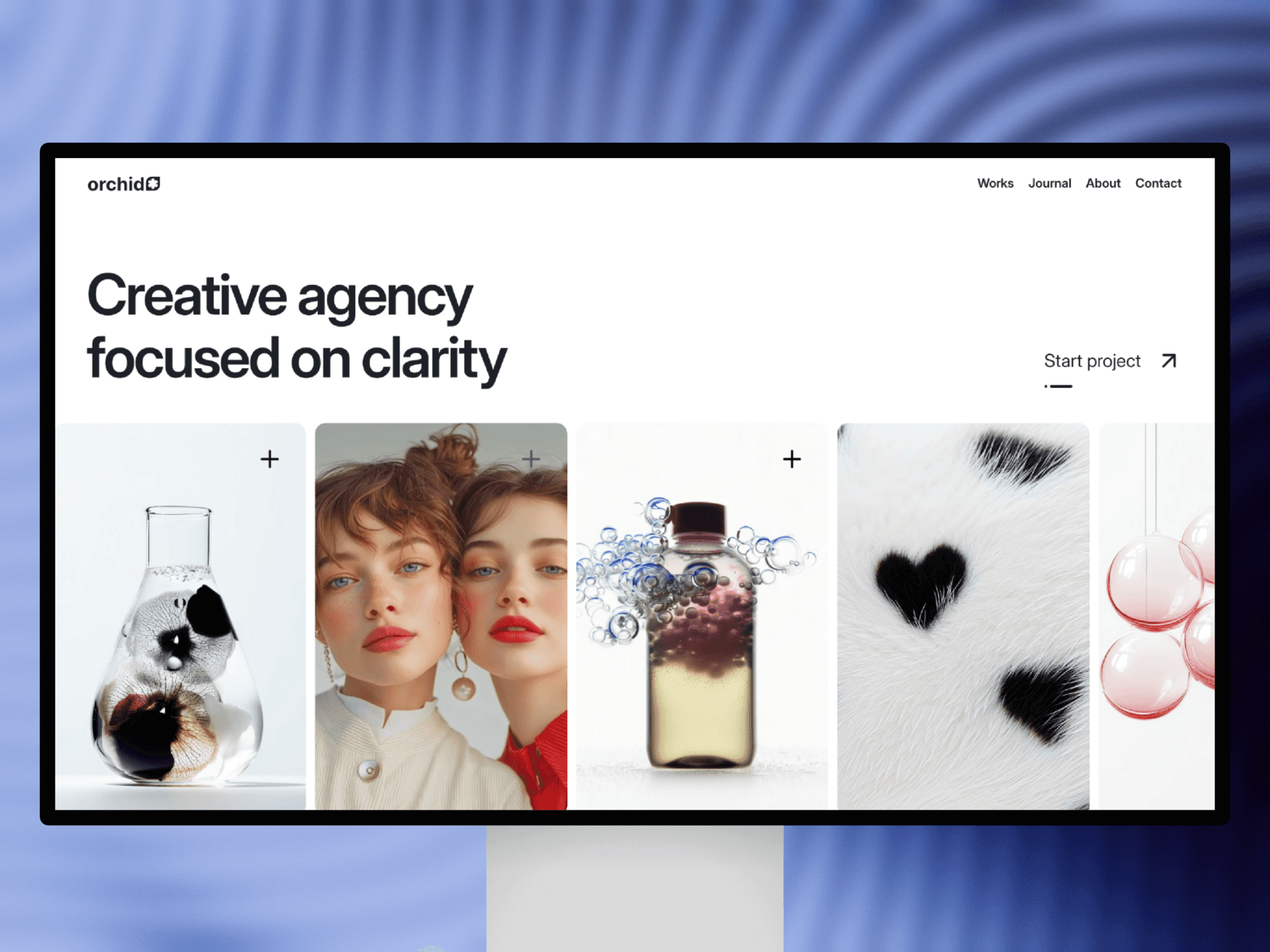
4 min read
Color systems that stay coherent
A palette is not a system. This guide shows how to build color rules that stay stable across UI, marketing, photography, and social, so your brand looks coherent even when the content changes weekly.
Category:
Colors
Updated:
Mar 26, 2026

Clara Vogel
Art Director
Most teams think in palettes: a handful of colors on a slide, a nice moodboard, a “primary” and an “accent.” It looks correct on day one. Then the real world arrives—different designers, different content, different lighting in photography, different screen calibrations, different deadlines. Without rules, color becomes improvisation, and improvisation becomes inconsistency.
A coherent color system is less about picking colors and more about assigning roles. What is your background color supposed to do? What is your text color supposed to do? What is your accent color allowed to touch? When those roles are clear, your work stays recognizable even when the exact content changes.
This is why many strong brands rely on a restrained base. Neutrals carry most of the surface area, which keeps layouts calm and readable. Then one accent does the signaling—links, buttons, highlights, small editorial moments. The brand feels consistent because the accent behaves predictably.
Color also needs to survive photography and imagery. If your site is clean but your images vary wildly, the brand will feel unstable. A simple approach is to decide how imagery should behave—more muted, more contrast, warmer, colder—and stick to it. Consistency is not about making every photo identical. It’s about making them belong to the same world.
Coherence is mostly about boundaries
The easiest way to keep color coherent is to define what not to do. If every section gets its own color theme, the site becomes a collage. If accents are used as decoration, the meaning of the accent disappears. If backgrounds change constantly, typography loses its authority.
Strong systems reduce choice. They give you a small set of allowed moves, and those moves become recognizable. That constraint is what creates the feeling of identity.
Closing
A palette is taste. A system is behavior. When color has roles and boundaries, your brand stays calm under pressure—across pages, formats, and timelines. You stop “matching colors,” and you start building a world that consistently feels like you.